Designing an Interactive Yoga System: Integrating Smart Mat, Wearable Sensors, and Holographic Feedback for Real-Time Motivation and Guidance
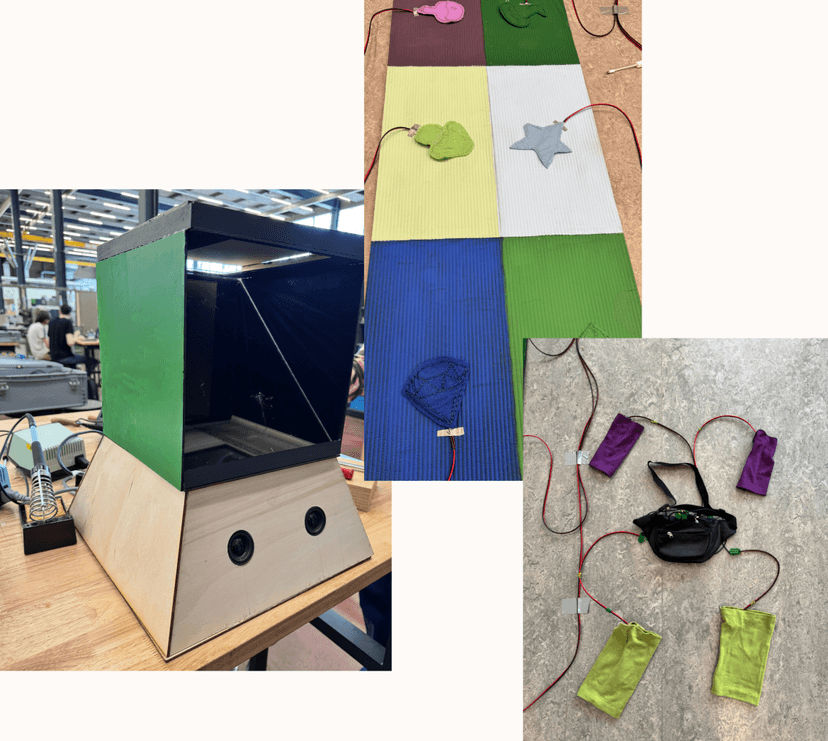
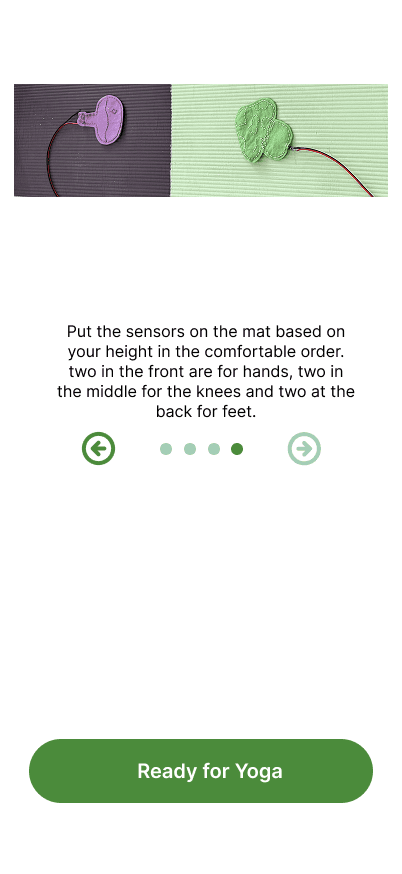
Regular exercise plays a fundamental role in human well-being. Yoga offers an accessible way to maintain an exercise routine. Yet, a lack of consistent motivation poses an obstacle for many people. The present study investigates novel ways to increase motivation for Yoga practice by combining personalized posture feedback with elements of enchantment. We build HoloFit, a 3-component prototype, combining a Yoga mat with pressure sensors, wearable angle sensors, and a hologram display providing instructions and posture feedback.
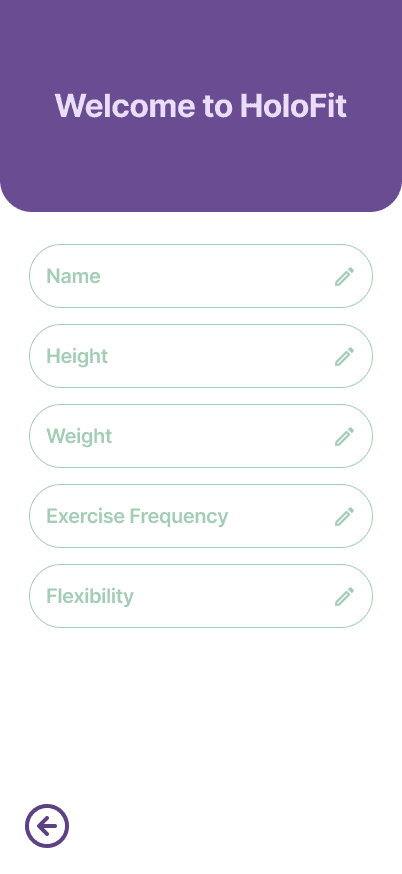
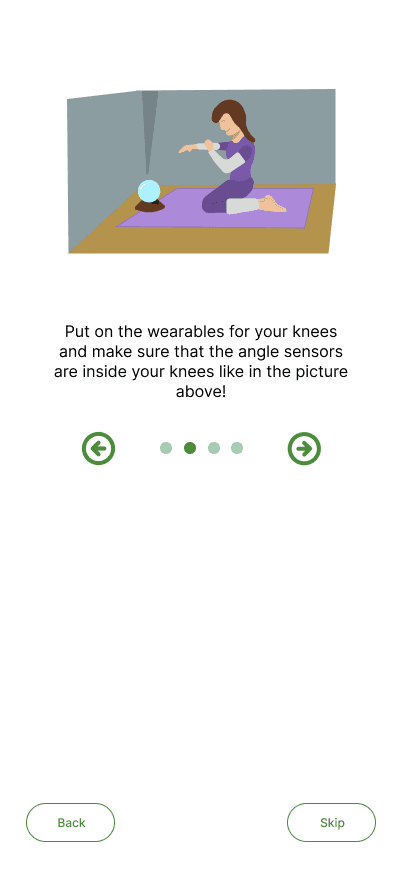
My role in the group was Designer. I was responsible for designing the hologram and collaborated with a teammate to create the smart mat and wearable sensors. I also designed the application and continuously iterated on the designs based on feedback and testing.
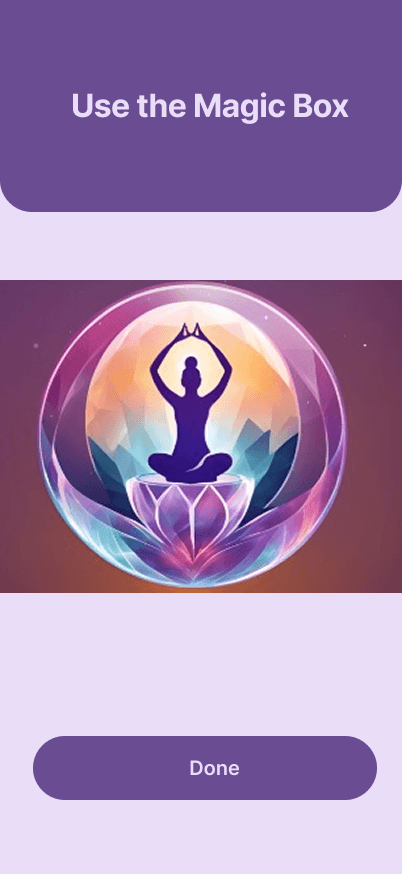
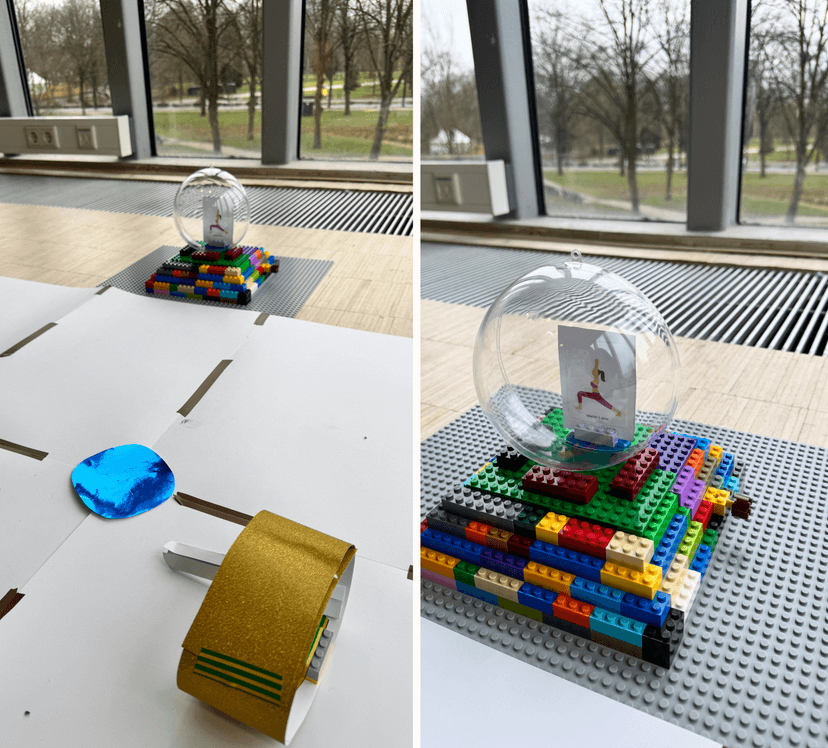
First, I used a 3D modeling environment (Tinkercad) to design our entire product and better visualize the concept. Once I had a clearer understanding of what we were building, I began researching how holograms work. I watched several tutorials and explored different methods to determine the most practical and effective approach. To create the hologram, I built a box using a laser cutter and painted it black to ensure a dark environment, which is essential for hologram visibility. I then added a transparent plastic sheet at a 45-degree angle to project the holographic image. Finally, I designed a pyramid-shaped base to house all the electronic components, including the Raspberry Pi, Arduino, and speakers used for providing feedback.
Our product demonstrated that it can significantly enhance motivation, and excersising yoga. However, Testing HoloFit with 10 participants did not create the intended feeling of enchantment, in qualitative follow-up interviews, participants said they found the prototype inspiring and useful. Extensive use of cables and incorrect feedback due to sensor limitations were reported as obstacles to enchantment. With improvements to the prototype, future versions of HoloFit could help make yoga more engaging and magical.

This project was a valuable learning experience that challenged me both technically and creatively. One of the main challenges was working with unfamiliar tools and technologies, such as hologram design and sensor integration. I had no prior experience with holographic displays, so I had to quickly teach myself through online research, videos, and trial-and-error. Another challenge was managing the technical limitations of our sensors, which affected the feedback accuracy. Designing in 3D for the first time also pushed me to think and consider real-world interactions more deeply. Even though there were difficulties, I learned how to be more flexible, solve problems on my own, and work better in a team. This project made me more confident and showed me that I can learn new skills and bring ideas to life with patience and teamwork.
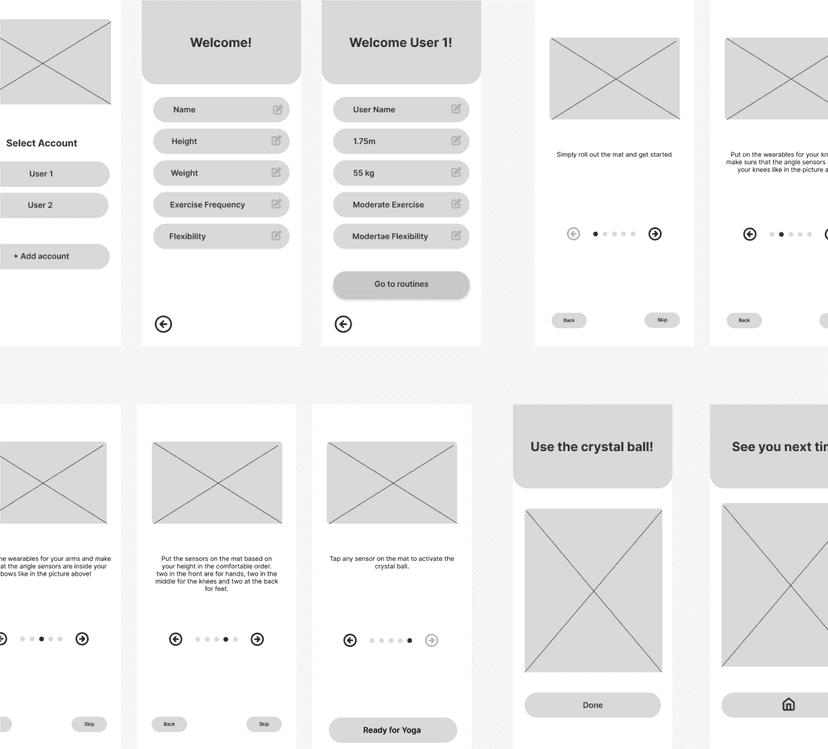
Wireframe
Low-Fi Prototype
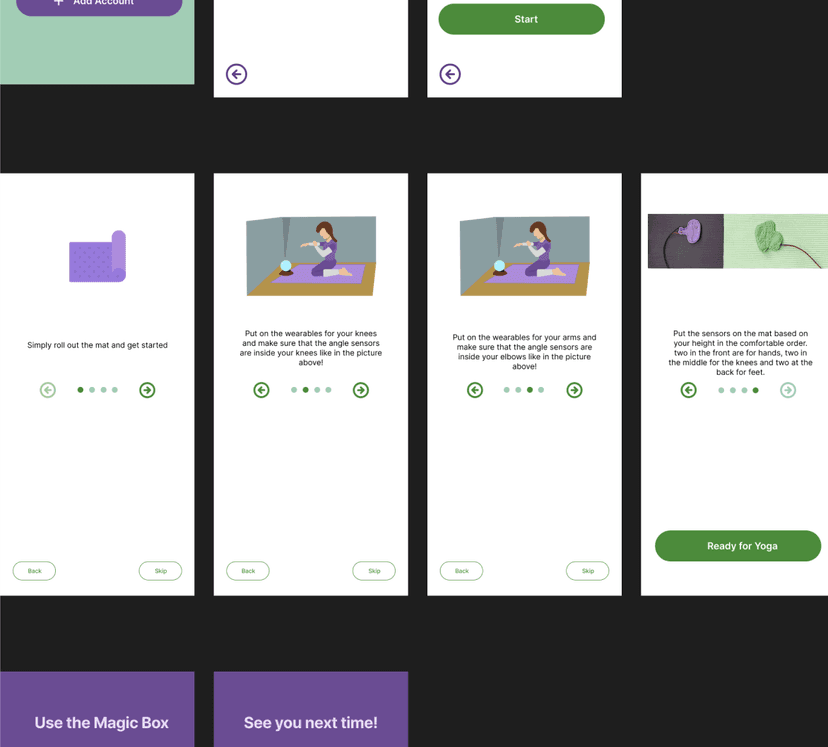
Application
Low-Fi Prototype